From the Archives: "Liturgy as the Form of Faith"
Each month, our blog features articles from the archives of Liturgy. Our goal is to share the wisdom from decades past so that we might celebrate the work and insights of these excellent ministers and scholars.
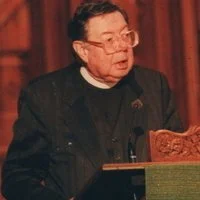
This article results from the 1994 engagement of renowned liturgical theologian Horace Allen in meetings with Reformed and Presbyterian pastors, lay people, and scholars to evaluate how to renew worship. They met in Geneva to critique then-current practices in their traditions and to answer two questions: “What is faith? What is liturgical form?” Horace Allen’s conclusions from the meetings generated a liturgically oriented definition of faith that resides in the long-standing gifts of the church calendar, focus on word and sacrament, concern with baptismal washing and teaching, and respect for the church’s centuries-long practice of Sunday as the day for worship that creates the body of Christ. –– Melinda Quivik
Selected Quotes from
“Liturgy as the Form of Faith”
~ ~ ~
The purpose of liturgy is not to instruct the community about something else. . . One of my Genevan colleagues described this danger as an “instrumental” view of worship. Not only is this view inherently destructive of good worship, he observed, but it borders on the idolatrous.
At bottom faith is an experience of commitment that is received from a community, nurtured in community and finally tested there, by word and sacrament. Opting out of that community is in fact, therefore, the renunciation of faith.
The locus of faith is not in the pious individual soul but in a social setting that can only be described by the most universal corporate human––which we share with much of the sentient created order––the family.
Faith does “take” architectural form, but more importantly it “takes” liturgical shape, which in turn will inevitably shape that faith. However varied the liturgical experience of the universal church through its twenty centuries, there are actually only a few basic forms or structures of worship, and they have to do with sequence, setting and sensory participation.
~ ~ ~
At the time of this writing, Horace T. Allen was a minister of the Presbyterian Church (USA) and Interim Pastor at the First Presbyterian Church of Brookline, Massachusetts. He taught preaching and liturgy at the Boston University School of Theology. He co-chaired the English Language Liturgical Consultation and as such advocated the use of The Revised Common Lectionary.
Horace T. Allen, “Liturgy as the form of Faith,” Liturgy, 12, no. 1 (1994): 7–10, https://doi.org/10.1080/0458063X.1994.10392259.
If you would like access to this article, please follow this link.